
Keith Jarret Ostinato
Progressive, step-by-step exercise regimen to master Keith Jarrett’s left‑hand ostinato and the right‑hand rhythmic interplay.
Lesson Guide
Overview
This lesson develops the coordination, rhythmic control, and hand independence needed to play a demanding left-hand ostinato drawn from the encore of Keith Jarrett’s 1984 Tokyo concert. The progressive regimen begins with basic figures and builds toward the complete version. Earlier stages isolate the beat-four accent, the final sixteenth-note pickup, left-hand syncopation over C7sus4, articulation, and increasingly fine right-hand subdivisions. After establishing the complete ostinato and approaching the hands like parts of a drum kit, exercises 32 to 36 combine different rhythmic ideas and shapes over the left-hand pattern. These final exercises should be practiced slowly before the tempo is gradually increased. A metronome is optional but can help maintain rhythmic honesty, and practice should stop whenever the left hand becomes tired or sore.
What You'll Learn
- Keep the left-hand ostinato solid while the right hand plays different rhythmic figures.
- Mix different rhythmic ideas and shapes over the ostinato in exercises 32 through 36.
- Begin exercises 32 through 36 slowly and increase the tempo gradually.
- Maintain the required staccato and accented articulations in the complete ostinato.
- Develop control of quarter-note, eighth-note, and sixteenth-note right-hand subdivisions.
- Approach the interaction between the hands as though individual notes belong to different drums.
Key Concepts
32 to 36
Exercises 32 through 36 are the final stage of the progressive regimen. They mix different rhythmic ideas and shapes over the established left-hand ostinato. Take time with each exercise: begin slowly and build the tempo gradually rather than forcing speed. This stage follows work on the complete ostinato, right-hand subdivisions, drum-like interplay between the hands, and the syncopated chords Keith Jarrett plays at the beginning of the solo.
Musical Examples
Keith Jarrett’s 1984 Tokyo concert encore
The opening excerpt comes from the encore of Keith Jarrett’s 1984 Tokyo concert and provides the source for the ostinato workout.
F major into C7sus4
The ostinato moves from F major into C7sus4. Its final sixteenth note is played as a double note with the thumb and anticipates the next harmony.
Sixteenth notes over the ostinato
In the final version, Keith Jarrett freely plays sixteenth notes over the ostinato. Exercise 24 first moves the right hand into sixteenth notes before later exercises combine rhythmic ideas and shapes.
Beginning-of-solo chords
Exercise 31 introduces the chords Keith Jarrett plays at the beginning of the solo, with particular attention to making the syncopation feel solid.
Also in This Lesson
Continue Learning
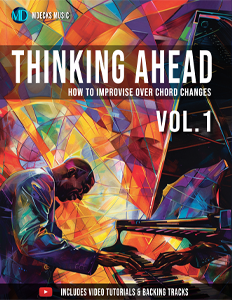
Thinking Ahead Vol.1 offers another focused, exercise-driven route to improvisation. It develops intentional target-note playing through chord tones, chromatic approaches, enclosures, and essential tensions across five jazz standards, with written solos, play-along and call-and-response tracks, and video lessons accessed through QR codes.
Related Lessons