Transform melodies, licks, and MIDI ideas through an entire universe of scales. All done by music theory and your own music.
Fantastic Scales doesn’t generate music for you. It analyzes what makes each scale distinctive through music theory, interval structure, harmonic context, and acoustic properties—then lets you hear those characteristics applied to real music.
Search by feeling, compare possibilities instantly, then see exactly what makes each scale sound the way it does. Built for composers, improvisers, and musicians looking for sounds they would not have found by name alone.
Fantastic Scales starts with music you can actually hear. Keep the recognizable gesture, change its pitch world, and compare what different scales do to the same idea.
The same transformation engine becomes a composition tool, an improvisation laboratory, and a way to turn scale theory into sound.
Take a melody, ostinato, sketch, or harmonic idea you already like and hear it refracted through entirely different scale worlds. Use Character Search to find directions you might never have chosen by name.
Turn one lick into a vocabulary laboratory. Transform familiar lines through unusual scales and chord contexts, then study the intervals and modes that create the new language.
Bring MIDI ideas from a larger workflow, experiment quickly, export what surprises you, and use visual structure to understand why the result feels different.
Start with a phrase that already has an identity. Instead of rewriting it from scratch, change the scale world around it and listen for a new direction.
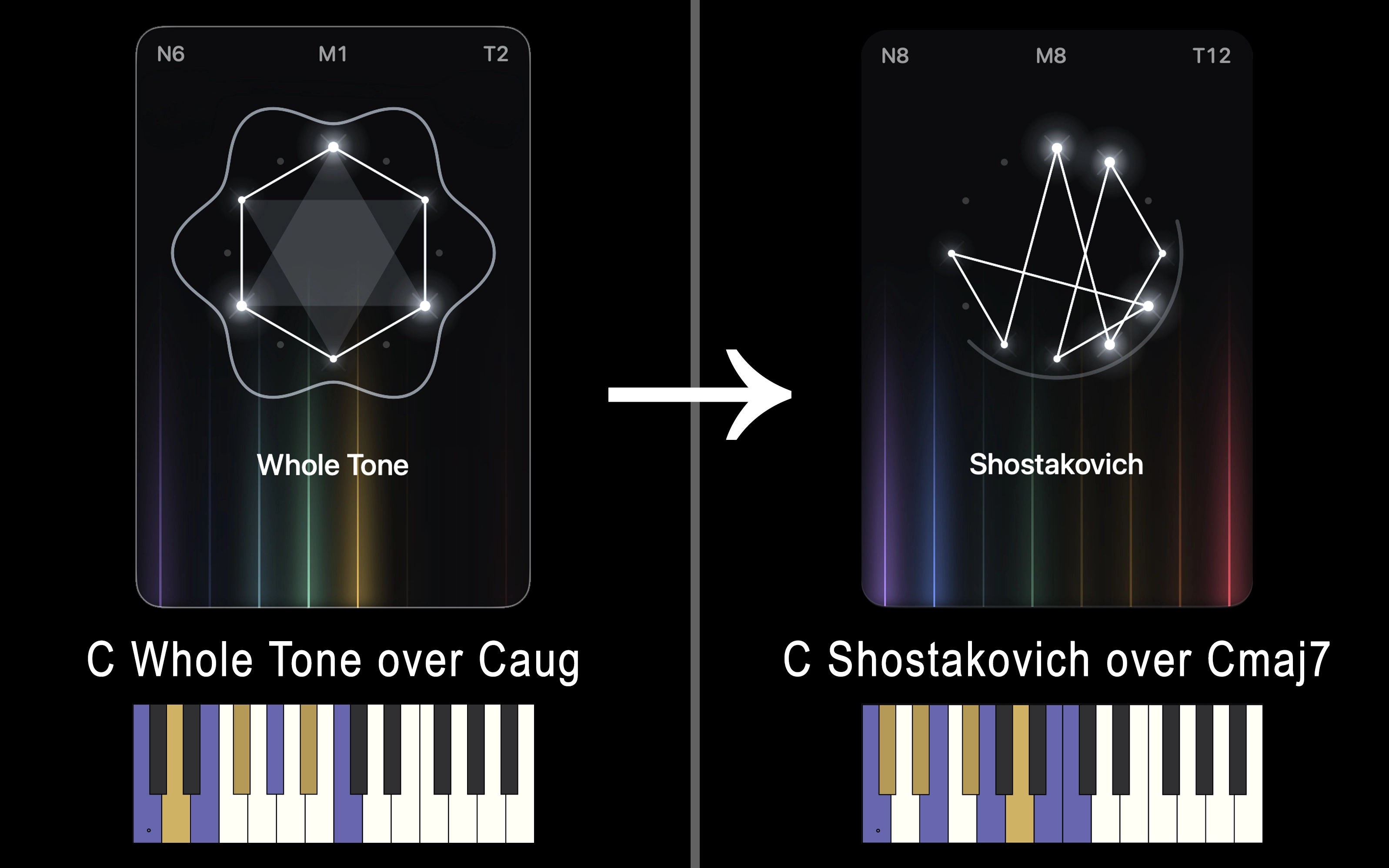
In our demo, a Debussy-like idea begins with C Whole Tone over an augmented triad. Search for Mysterious in a maj7 context and Fantastic Scales surfaces the Shostakovich scale among the strongest matches. Apply it, and the same idea takes on a completely different harmonic character.
Import a line you already know. Transform it through unfamiliar scales while keeping the musical gesture intact enough to recognize. Hear the new interval language before you ever memorize a formula.
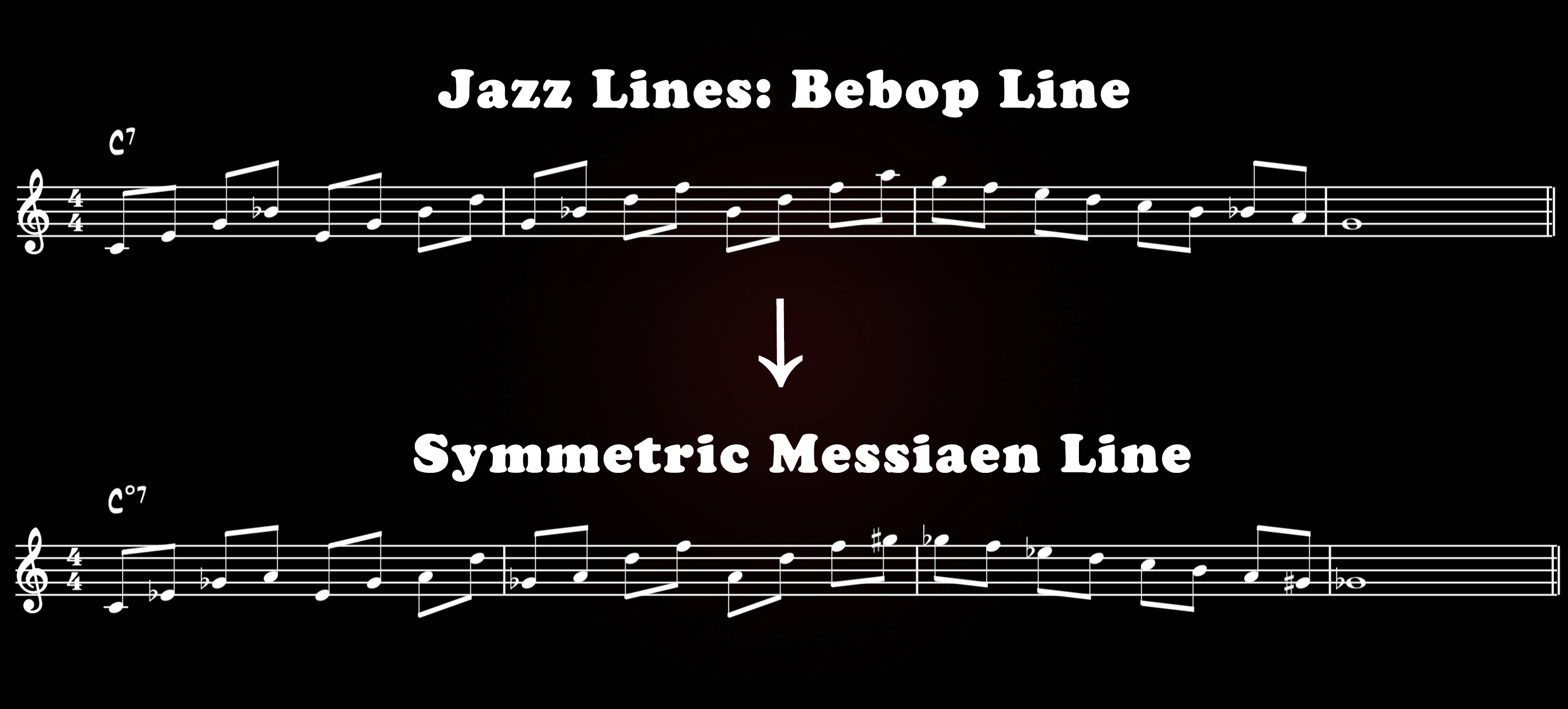
Our jazz demo starts with a bebop line and sends it through a symmetric Messiaen scale— a quick way to hear how familiar phrasing can become fresh improvisational material.
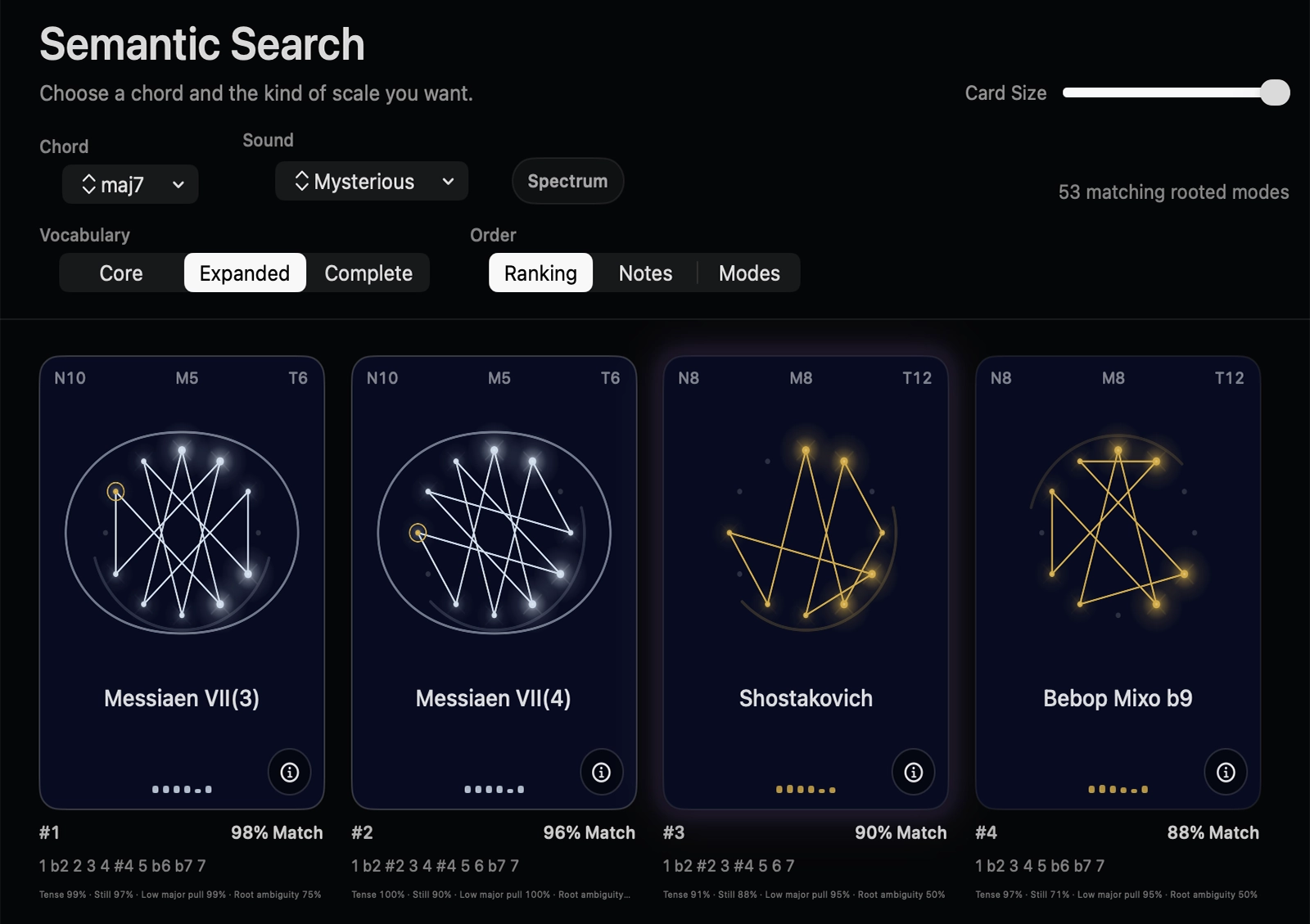
Search for a musical character instead of starting from a scale name. Fantastic Scales ranks scales against the direction you choose.
Or go beneath the Characters and search by Sound Property:
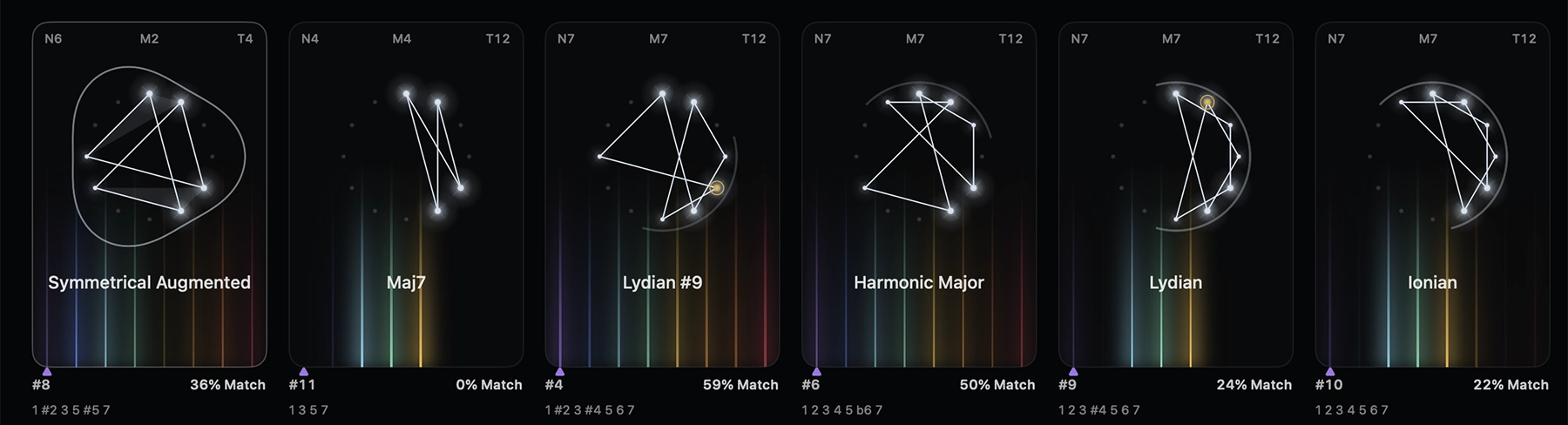
Every scale has a second visual fingerprint: a spectroscopy-inspired view of all eight Character affinities. Position tells you which Character you are seeing. Intensity tells you how strongly the scale expresses it.
Character tells you how a scale tends to feel. The Scale Portrait shows what the scale is made of.
Open Reading This Scale Portrait inside the app to interact with the geometry and learn what each element means.
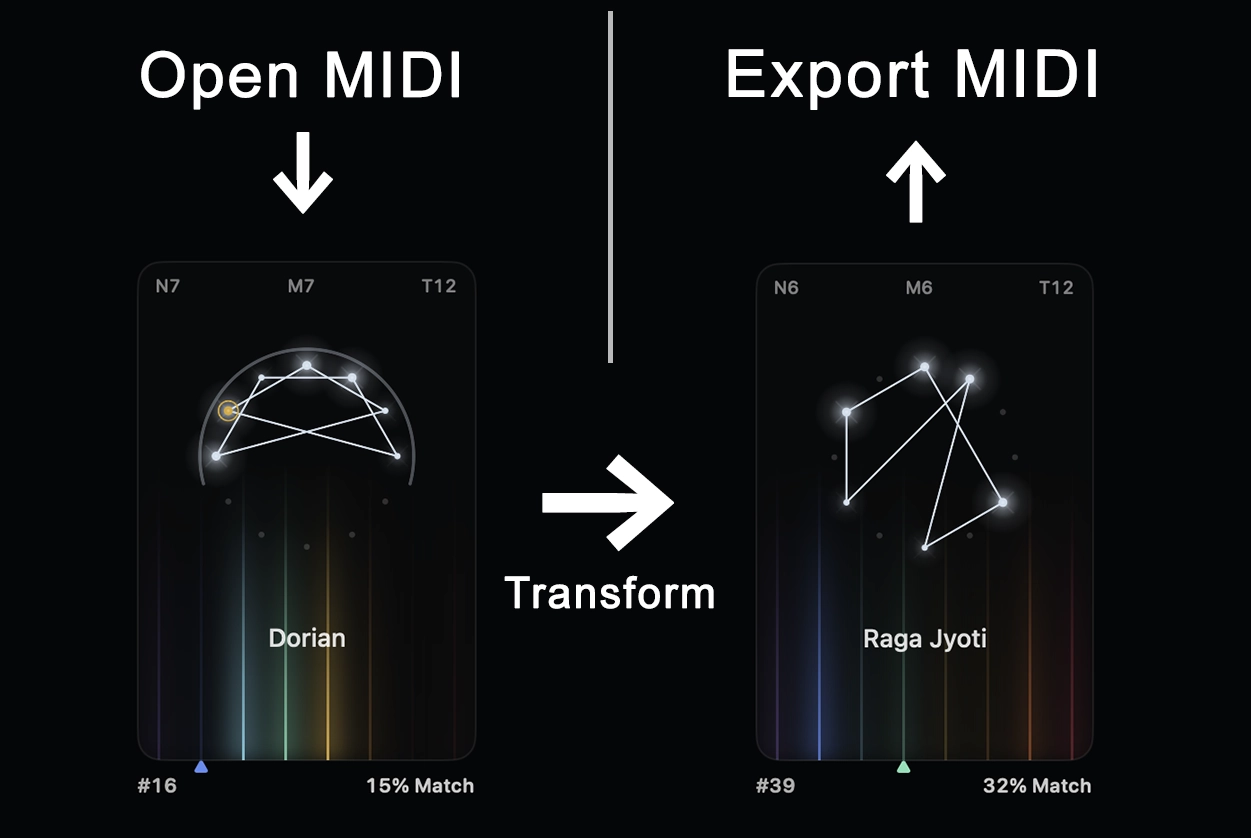
Bring in a melody, lick, pattern, ostinato, or sketch from your DAW or notation software. Explore it through different scales, then export the transformed MIDI and continue working wherever you create music.
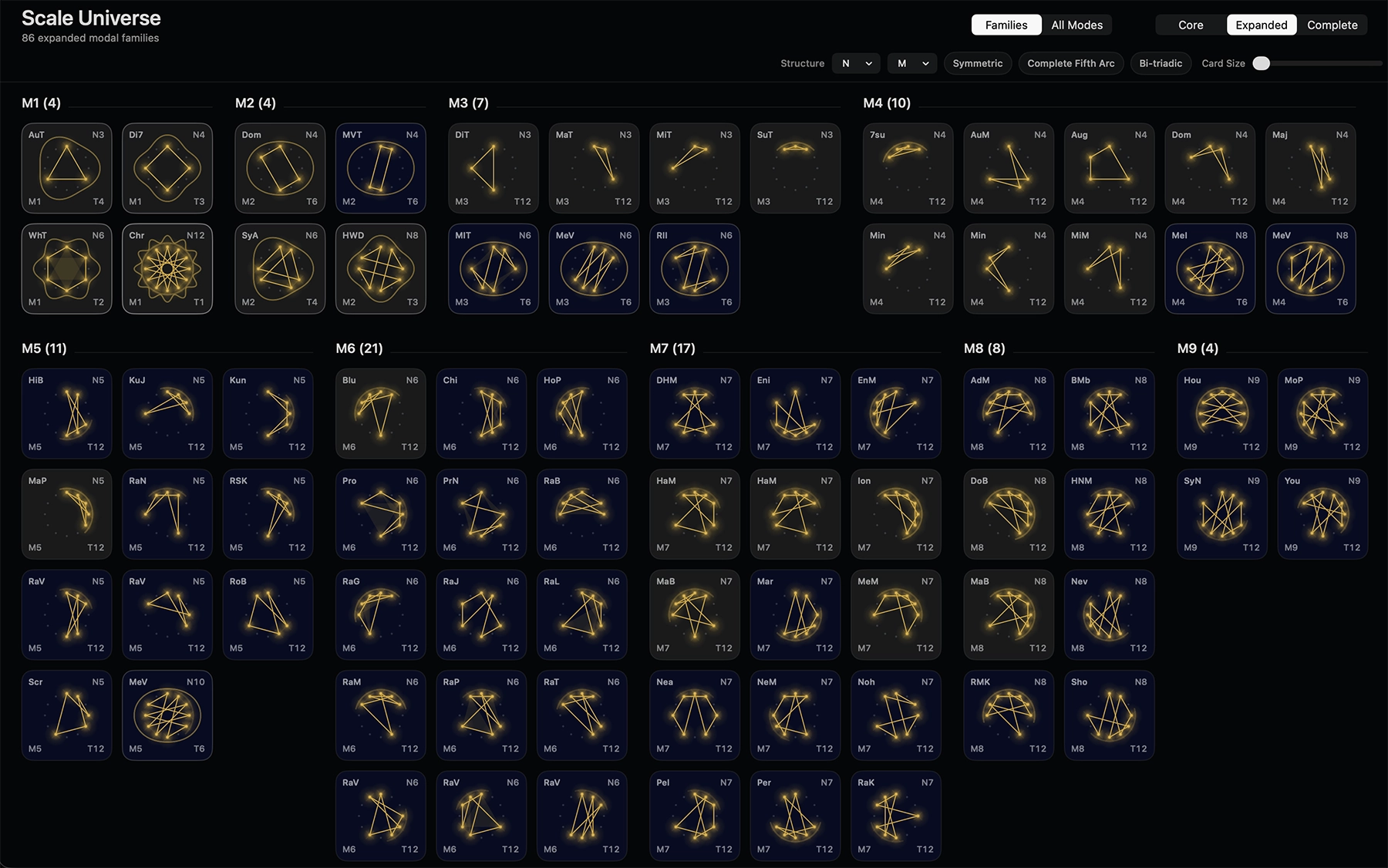
Fantastic Scales maps all 2,036 scales of three or more notes in the twelve-note system into related modal families. The complete root-based combinatorial set contains 2,048 pitch collections; the 12 two-note intervals are intentionally omitted.
Explore every supported scale for free. Full Access expands the creative search and workflow tools with one permanent purchase.
Both apps share a deep foundation of scale knowledge, but they serve different musical goals. Fantastic Scales is built for discovery, comparison, composition, and creative transformation. Tessitura Pro Scales is built for structured practice, all-key fluency, patterns, and instrumental mastery.
No. You can begin by listening. Search by Character, audition results, and transform music first. Scale Portraits, related modes, and structural tools are there when you want to understand what you are hearing.
No. Fantastic Scales does not use generative AI to compose music or invent phrases for you. Its scale analysis and Character Search are built from music-theory structure, interval relationships, harmonic context, and acoustic and psychoacoustic properties of the scales themselves.
When Fantastic Scales transforms a Play-Along or your MIDI idea, it uses a theory-based mapping system to reinterpret the pitches inside the selected scale and chord context while preserving the timing, durations, rests, and recognizable musical shape of the original.
The musical idea remains yours. Fantastic Scales lets you hear what that idea becomes in another scale world.
It is a visual fingerprint showing how strongly a scale expresses eight high-level Characters: Mysterious, Sad, Peaceful, Floating, Joyful, Epic, Restless, and Dramatic. Each Character keeps a fixed position so spectra can be compared across scales.
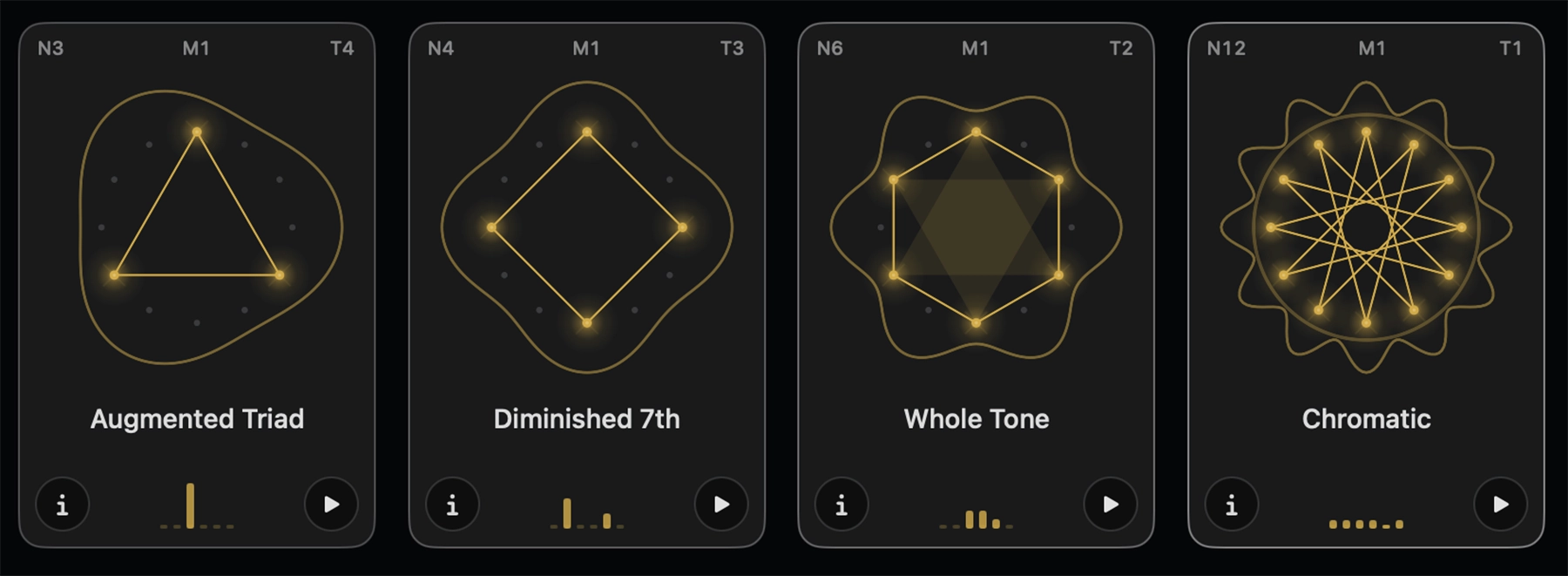
A Scale Portrait combines several structural properties of a scale into one visual identity, including modes, symmetry, fifths structure, interval content, and source-family relationships.
Yes. Import a MIDI idea, transform it through different scales, and export the transformed result. The free version includes two successful imports; Full Access removes the import limit and adds transposition into any key.
No. MIDI export is available for transformed user-imported MIDI in the free experience as well.
No. Fantastic Scales is free to download. Full Access is a one-time permanent purchase.
Fantastic Scales is centered on discovery, comparison, creative transformation, composition, and improvisational exploration. Tessitura Pro Scales is centered on practicing scales deeply, building patterns, developing all-key fluency, and instrumental mastery.
Start with a sound, a scale, a phrase, or a musical idea—and explore where it can go.